Available for select projects
I make products you can hold, research how people use them, and make sure the work speaks for itself — visually and technically.
ScrollI don't believe in the separation of technical and creative minds.
Design, engineering, research, and the arts don't usually live in the same person — but that overlap is exactly where my work comes from. I've spent years building physical products, running research operations, studying users, and communicating complex ideas to people who need to act on them.
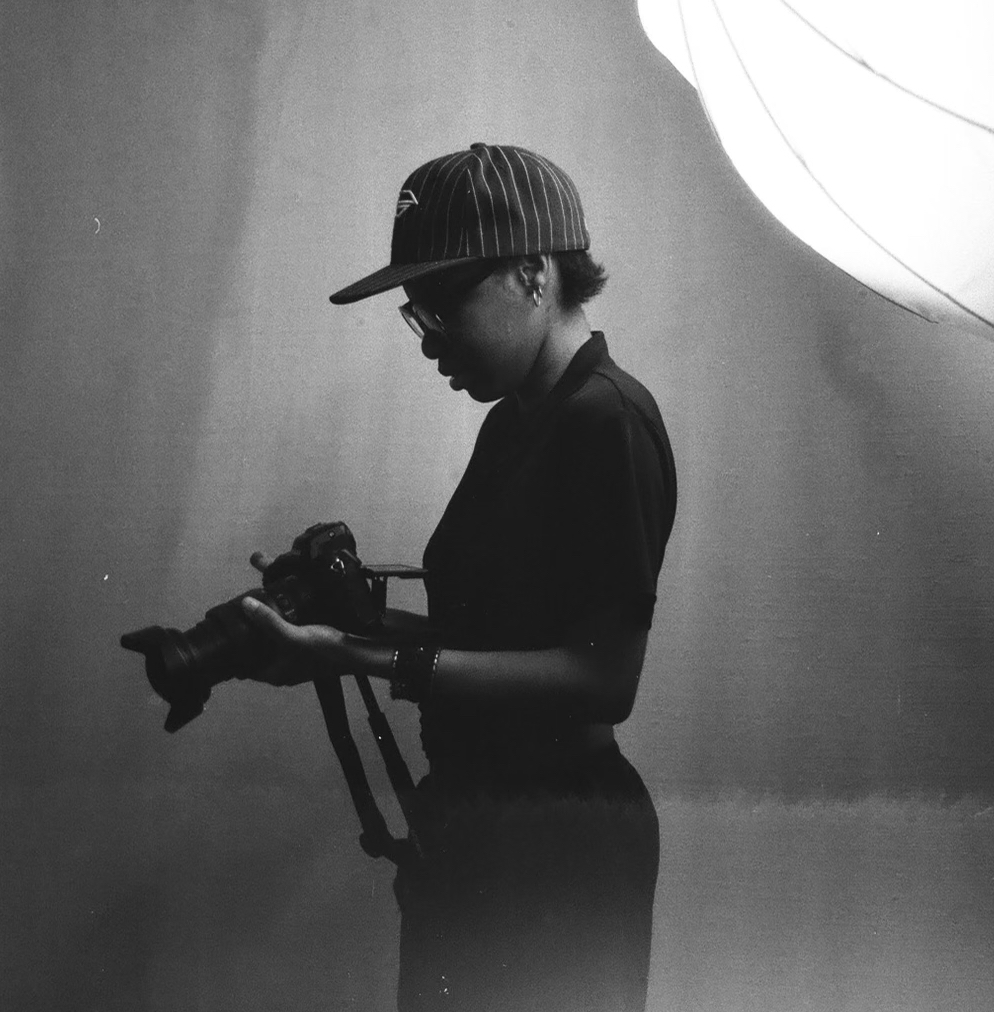
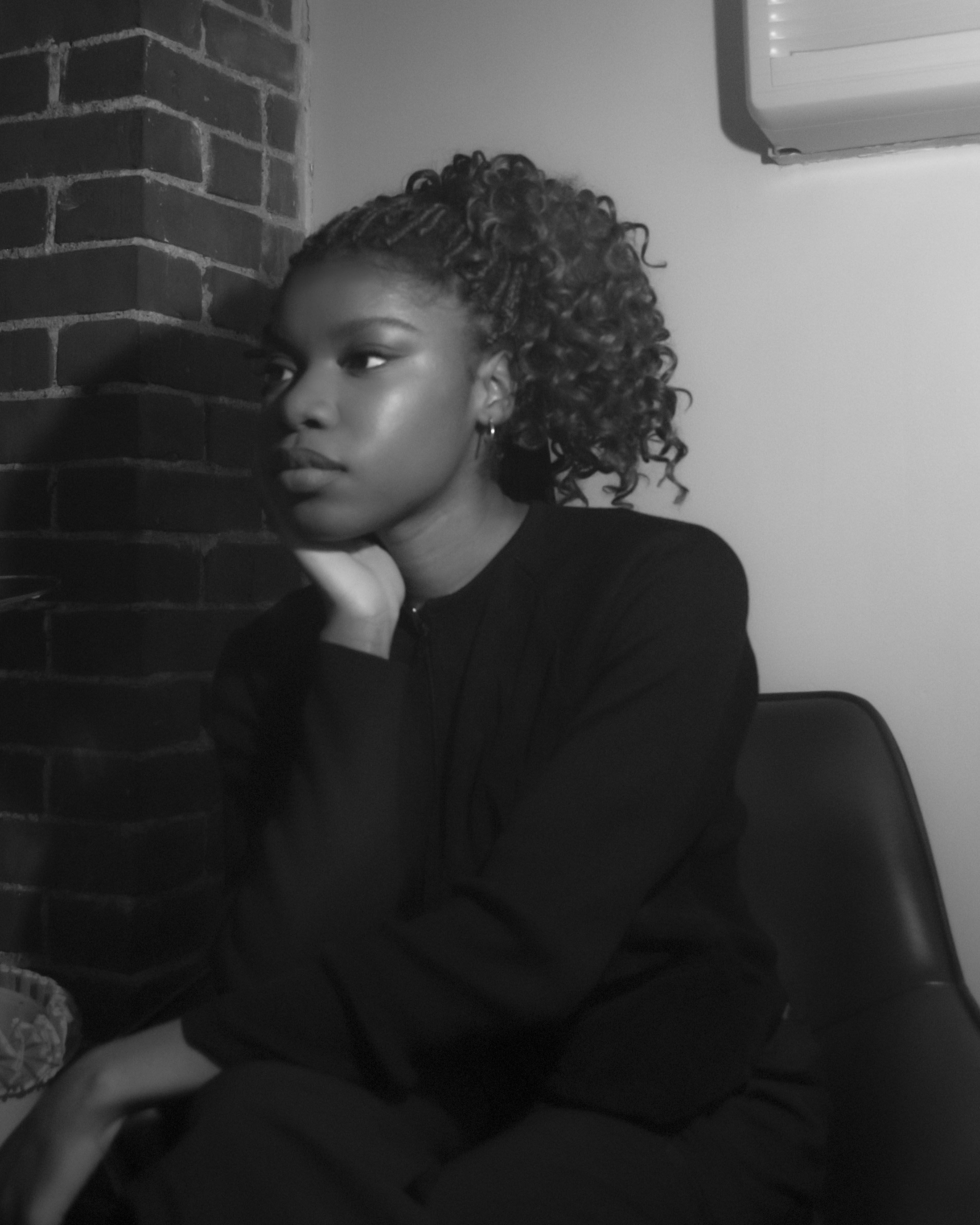
I care about how things work, who they work for, and how they look doing it. This page is a window into the product, design, and research side of my practice — sitting alongside my work as an artist and photographer.
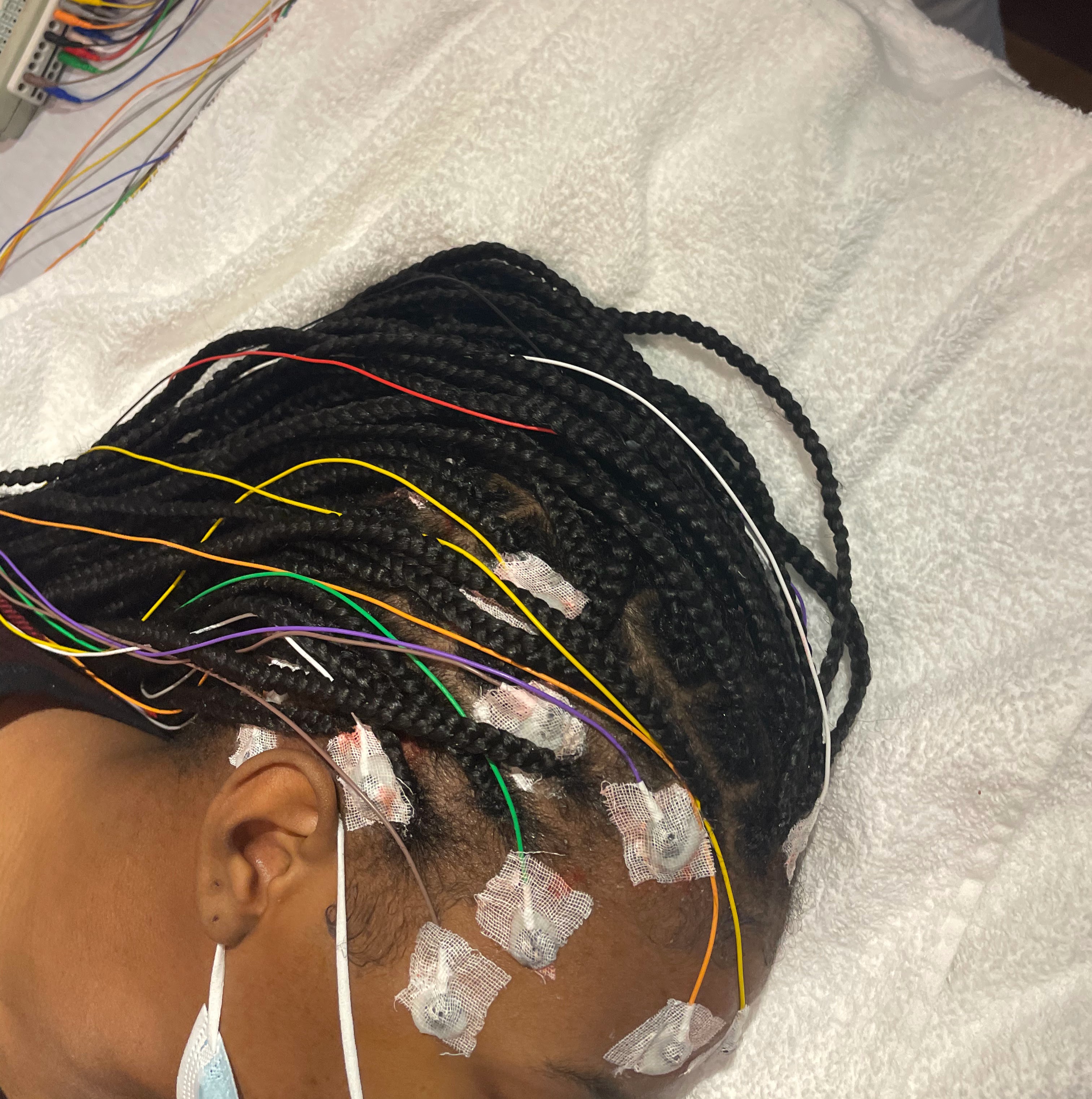
What starts as a design problem rarely stays one. For six years I held two concurrent roles on the same project — product design engineer and ECE researcher — contributing simultaneously at the fabrication bench, the coordination table, and the publication stage.
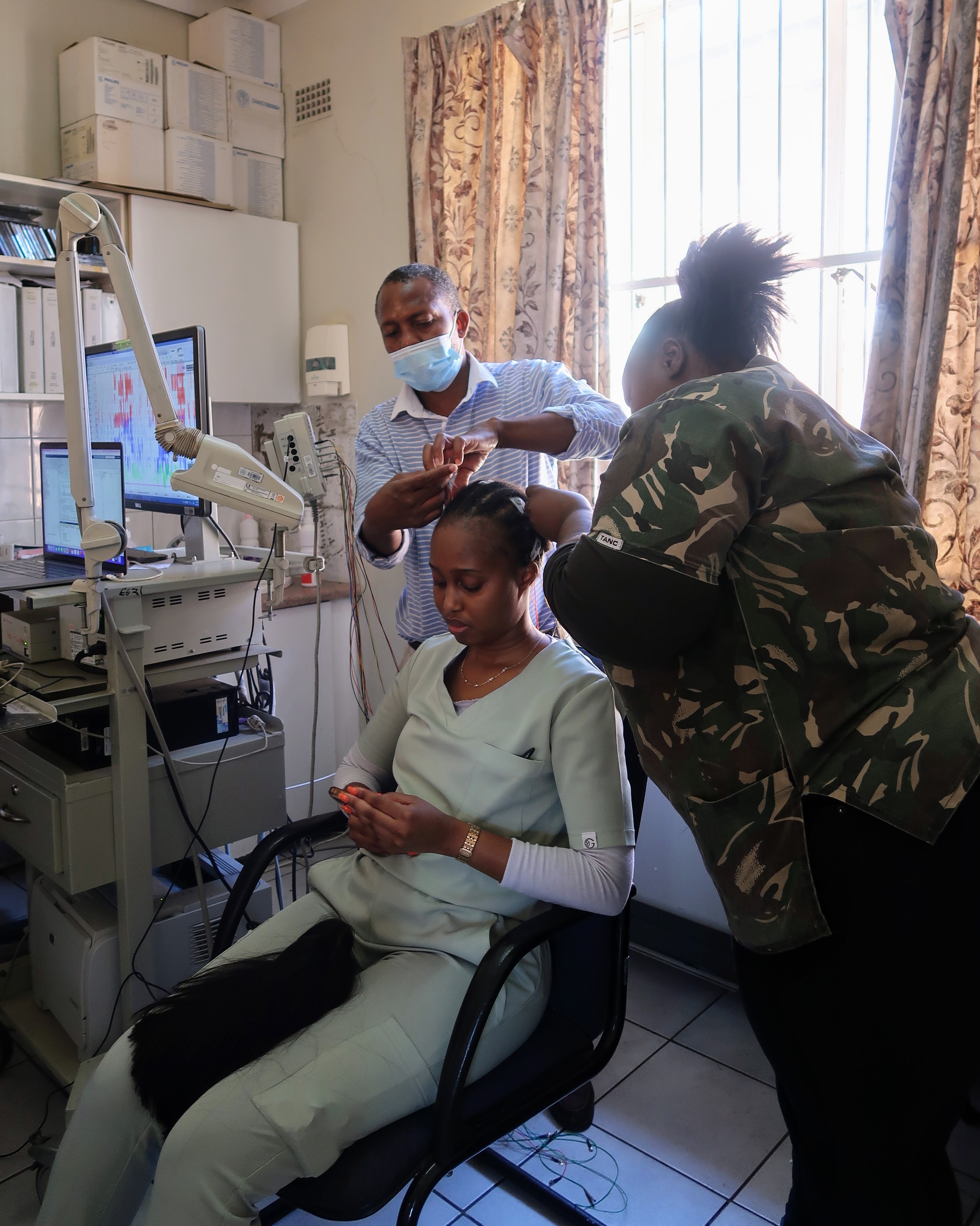
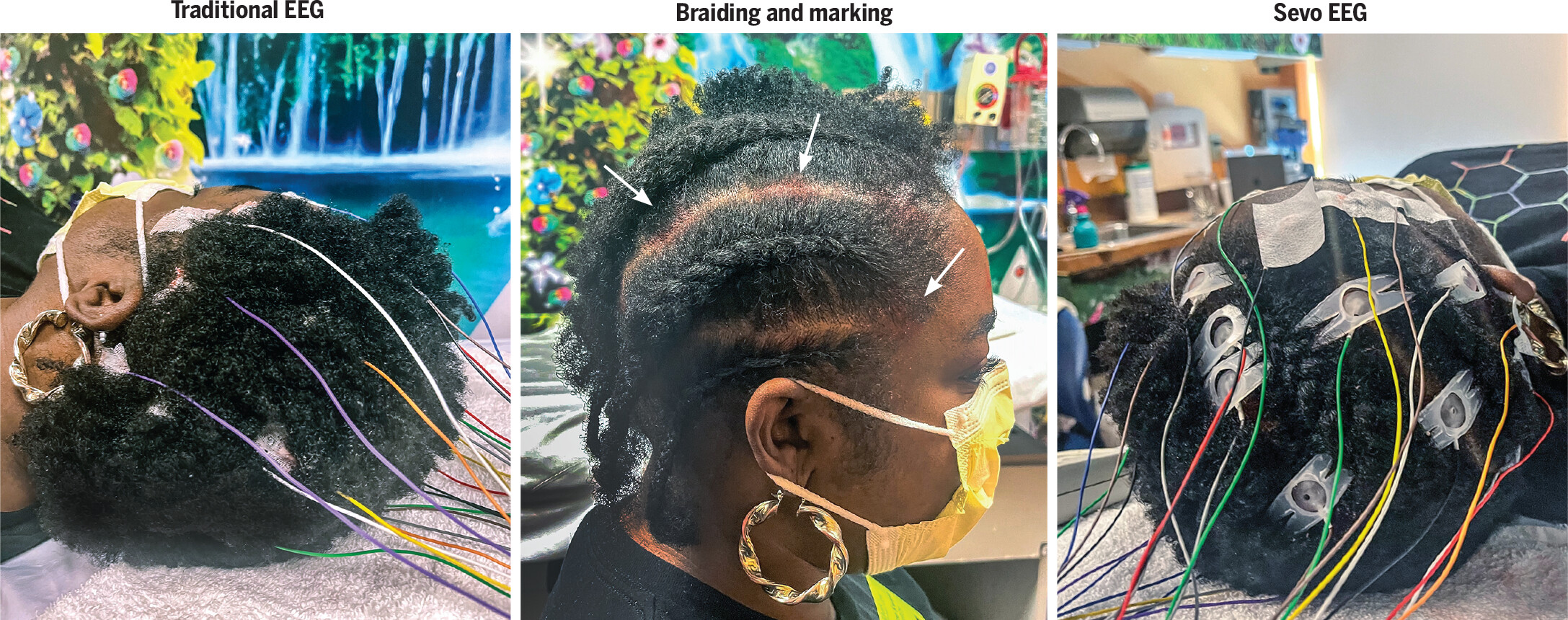
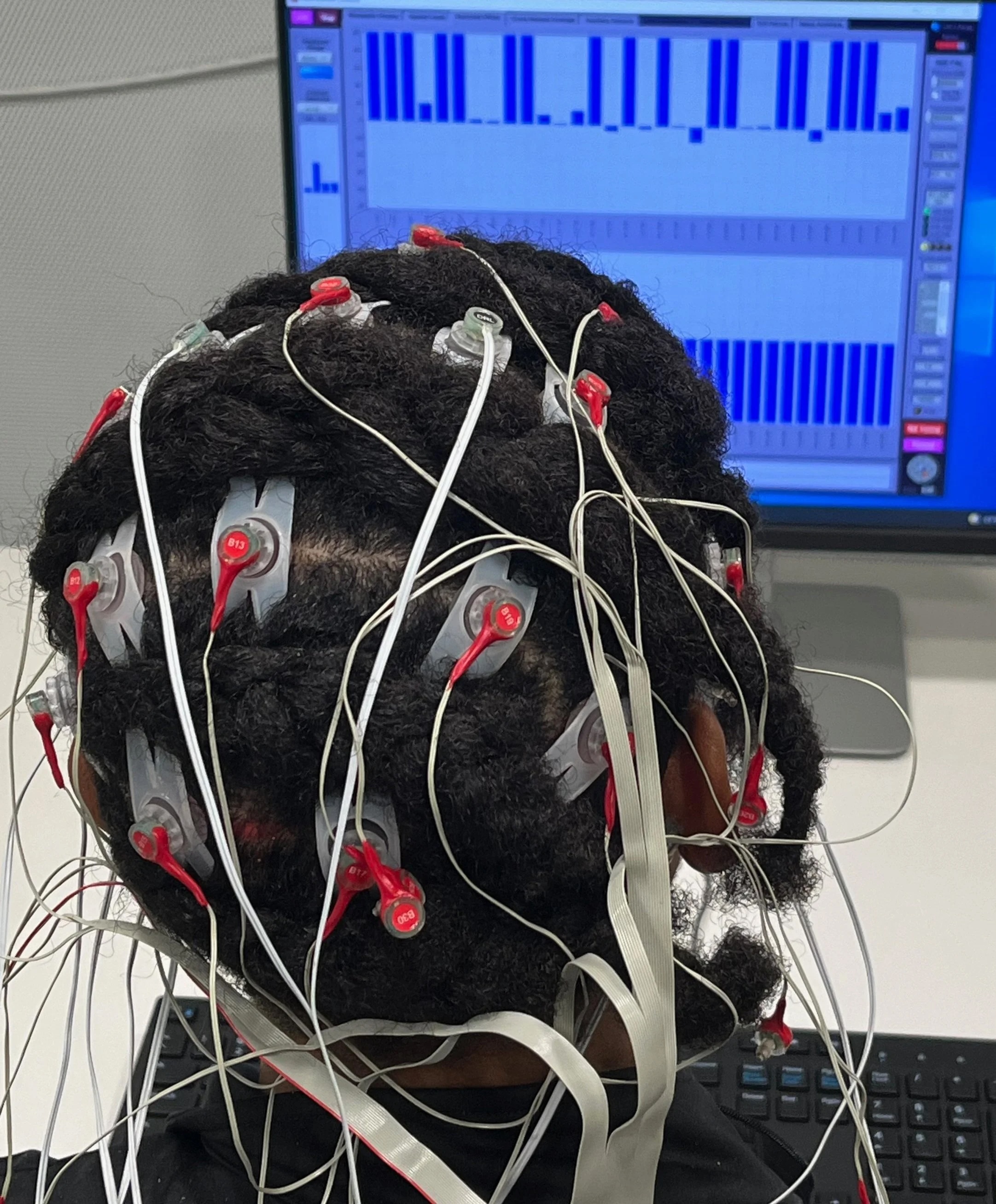
On the design side: I prototyped and tested research-grade wearable EEG devices using SolidWorks and digital fabrication, advised on hair and scalp interface usability and accessibility, managed design documentation for accuracy and repeatability, and led initial FDA application materials.
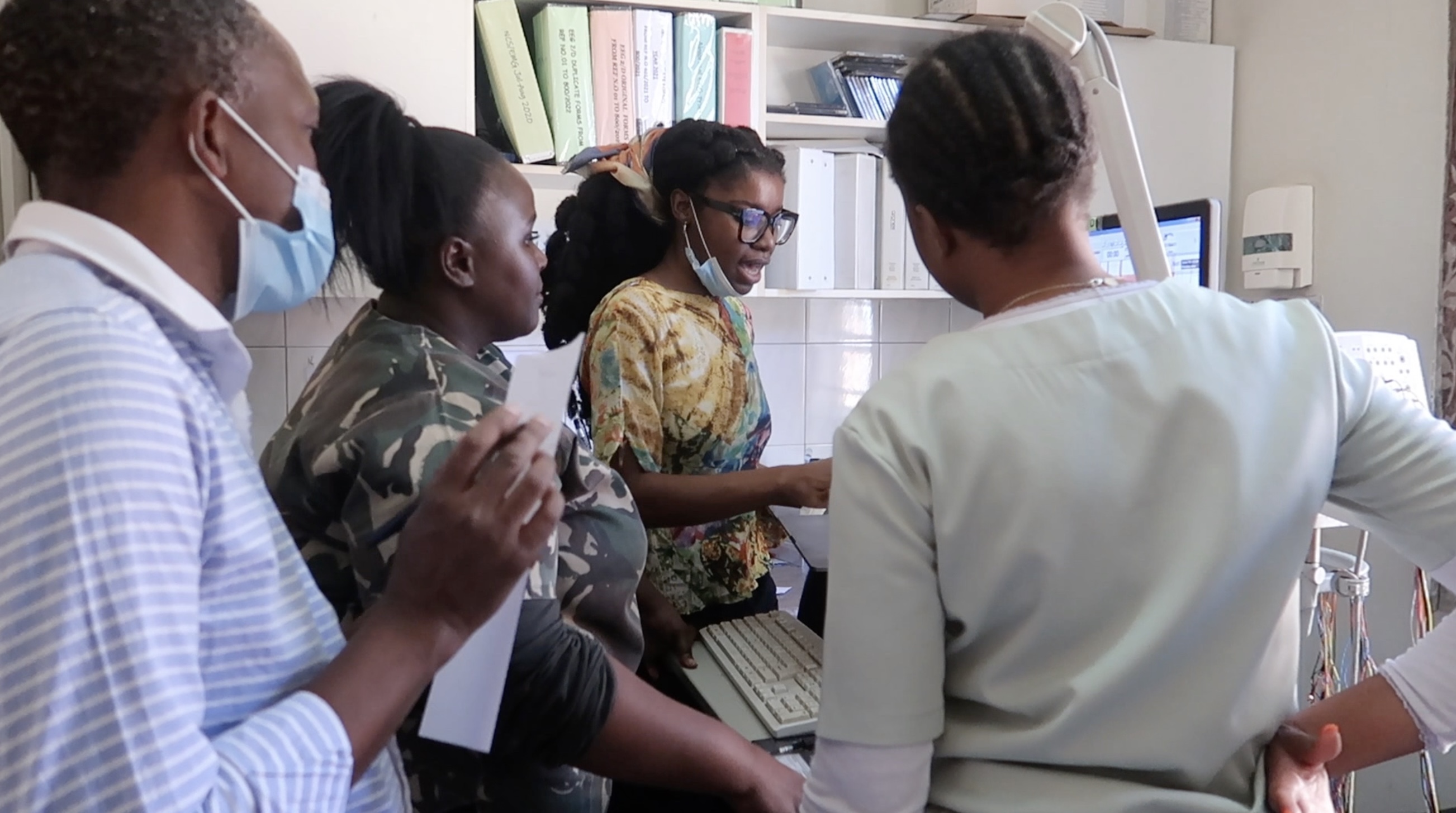
On the research side: I coordinated testing across four international sites, developed standardized intake procedures, partnered with clinicians and vendors on system evaluation, supported grant writing and reporting, and co-authored multiple peer-reviewed publications.
Holding both roles simultaneously meant I was constantly translating — between making and managing, between technical requirements and human needs, between what was built and what needed to be communicated.
That's the kind of work I do best.
Featured on
Project 01
Responsive On-Body Fragility Indication
A wearable system designed to sense and communicate fragility states — exploring the intersection of the body, material feedback, and responsive design.
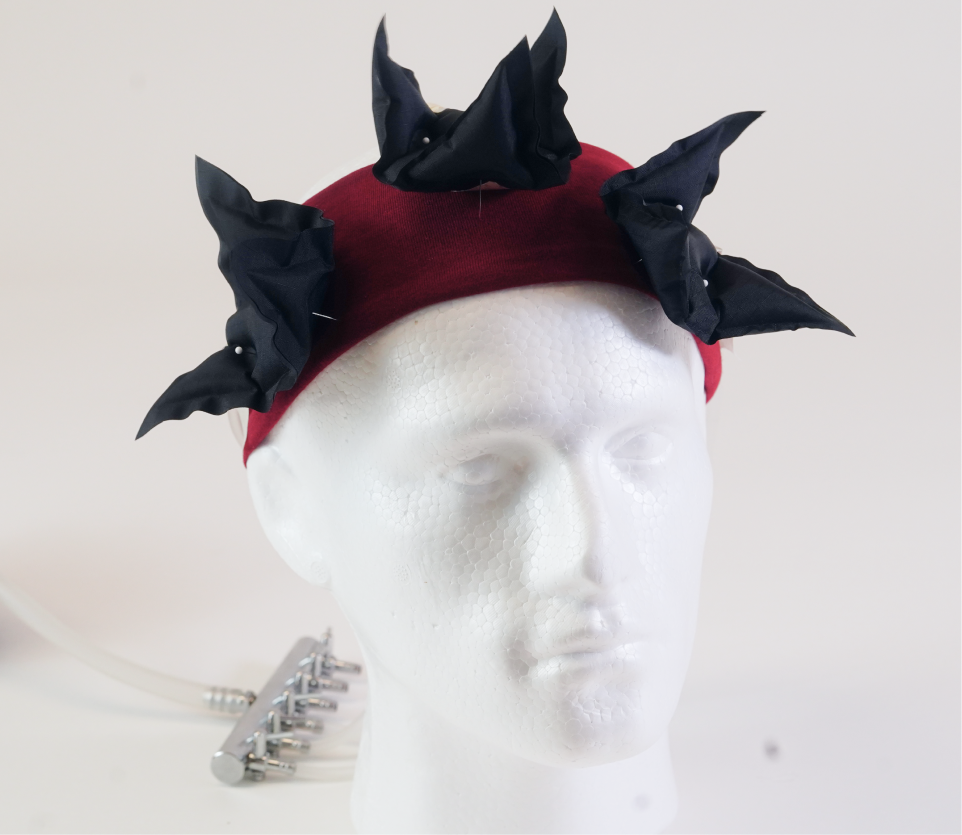
Overview: A wearable head accessory for patients recovering from brain or head injuries. The project addresses a real gap: people in recovery are physically vulnerable in public but have no reliable, non-verbal way to communicate that to strangers around them.
The Problem: There are almost no social conventions for signaling bodily fragility in public. And verbal communication is not always accessible or comfortable for someone in recovery. The idea was to let an object carry that burden instead of the person.
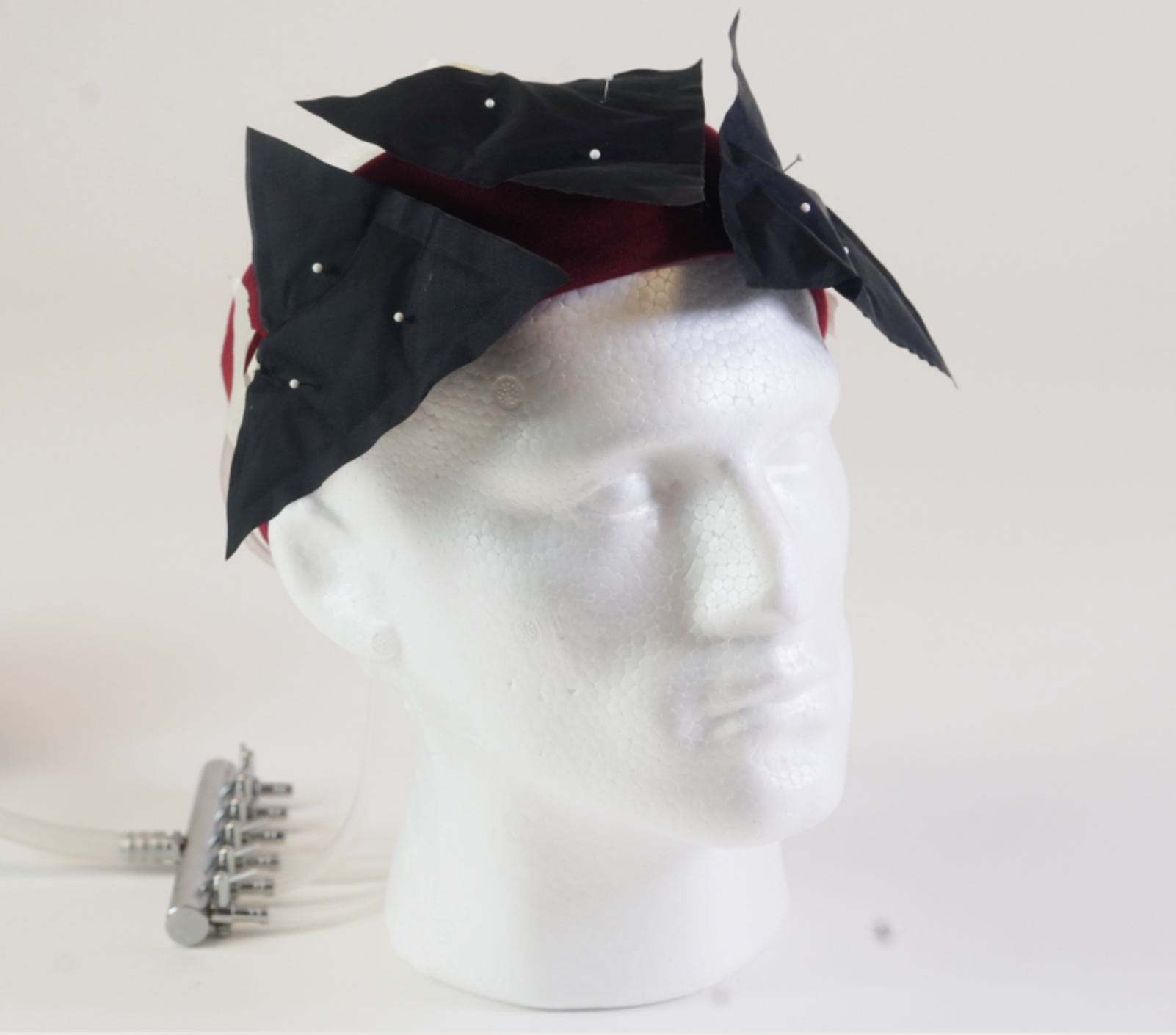
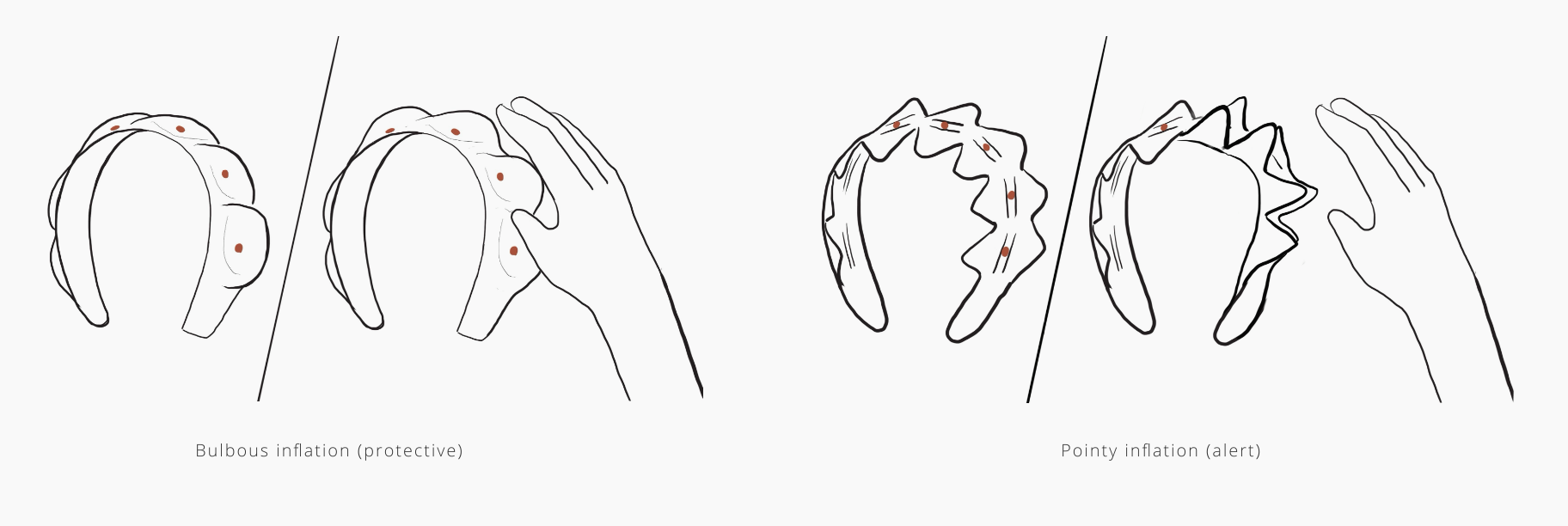
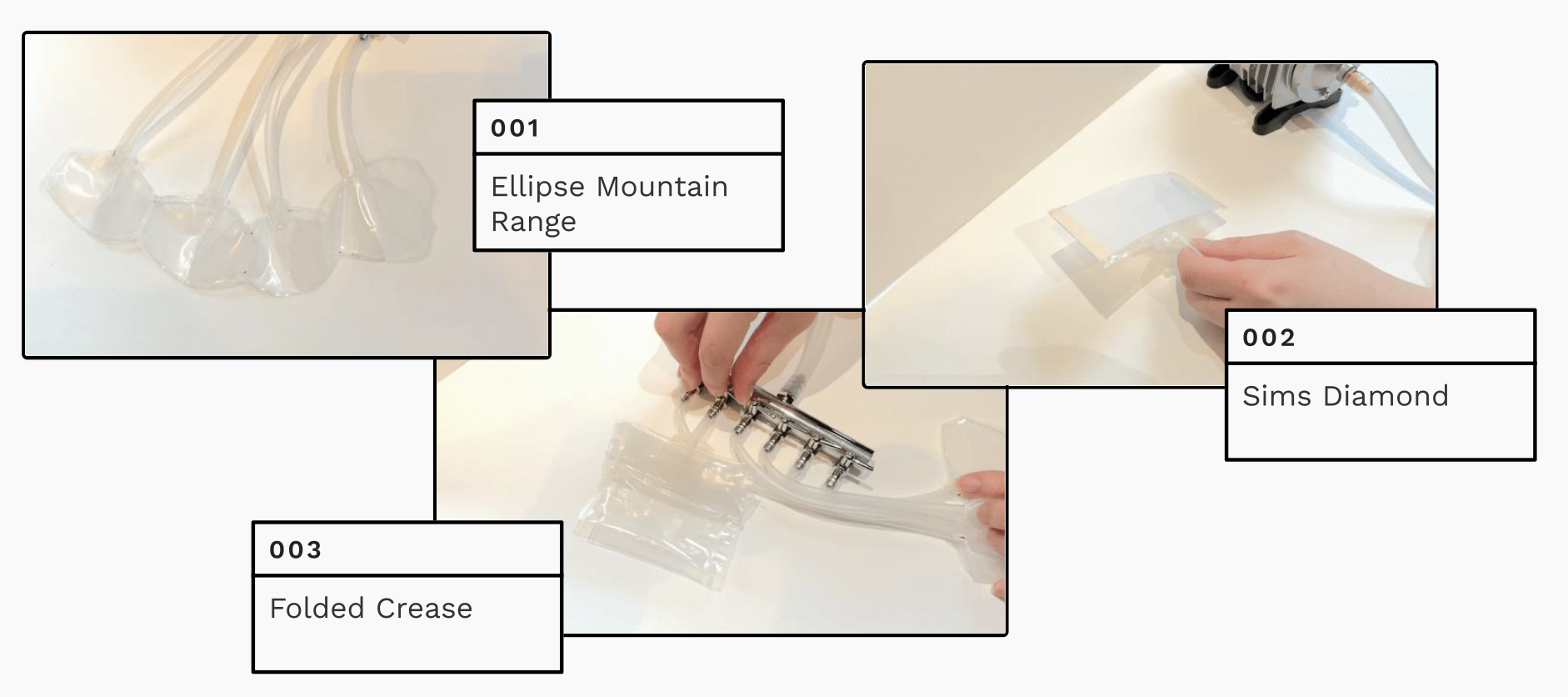
Design Process: Early sketches explored two inflation behaviors as distinct visual languages: bulbous forms for a protective, padded look, and pointy spike forms for a more active warning signal. Three physical prototypes followed, testing different structural approaches to inflatable geometry with fabric and air manifolds. A flat cut template was developed to fold into repeating diamond-spike modules, which made the form reproducible and iterable. The final prototype used a red fabric base with dark inflatable spike panels, showing both the protective silhouette and the social signaling function.
Technical System: The prototype included a photoresistor sensor that detected changes in ambient light, which triggered a small air pump to inflate the spike structures. The inflation happens passively and automatically, no input required from the wearer. That was an important constraint given the user's limited cognitive and physical bandwidth during recovery.
Takeaway: The project is a starting point for rethinking how vulnerability can be communicated through wearables, using form, material, and responsive electronics as the medium rather than words.
Project 02
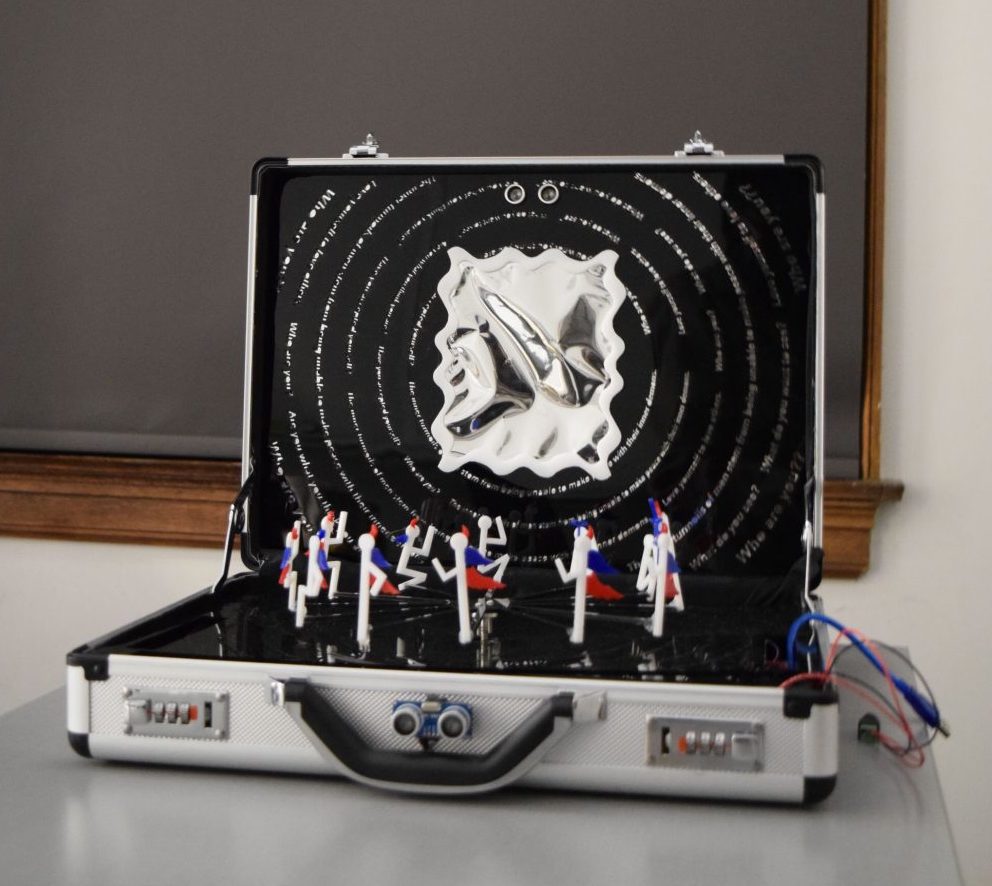
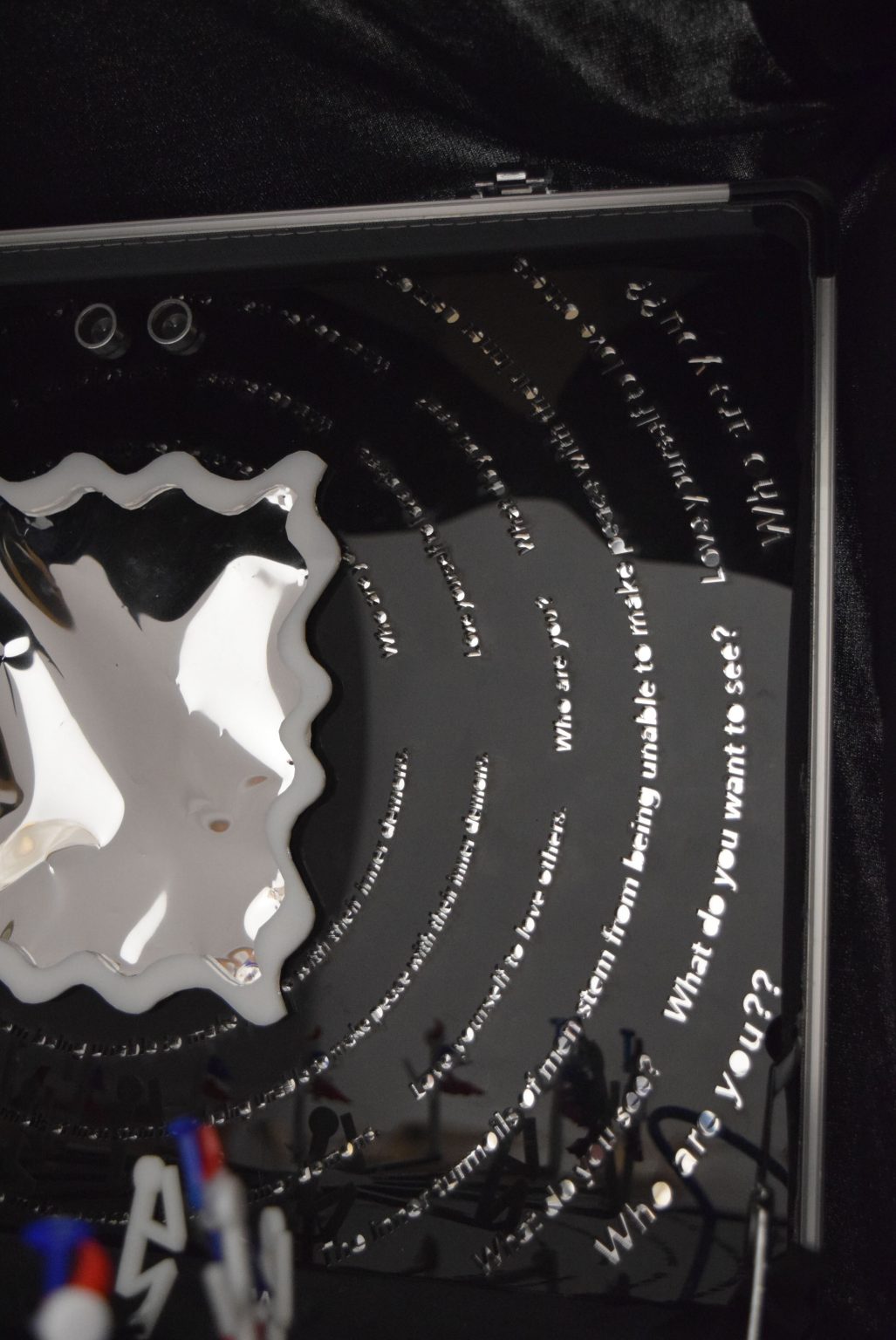
Who Are You?
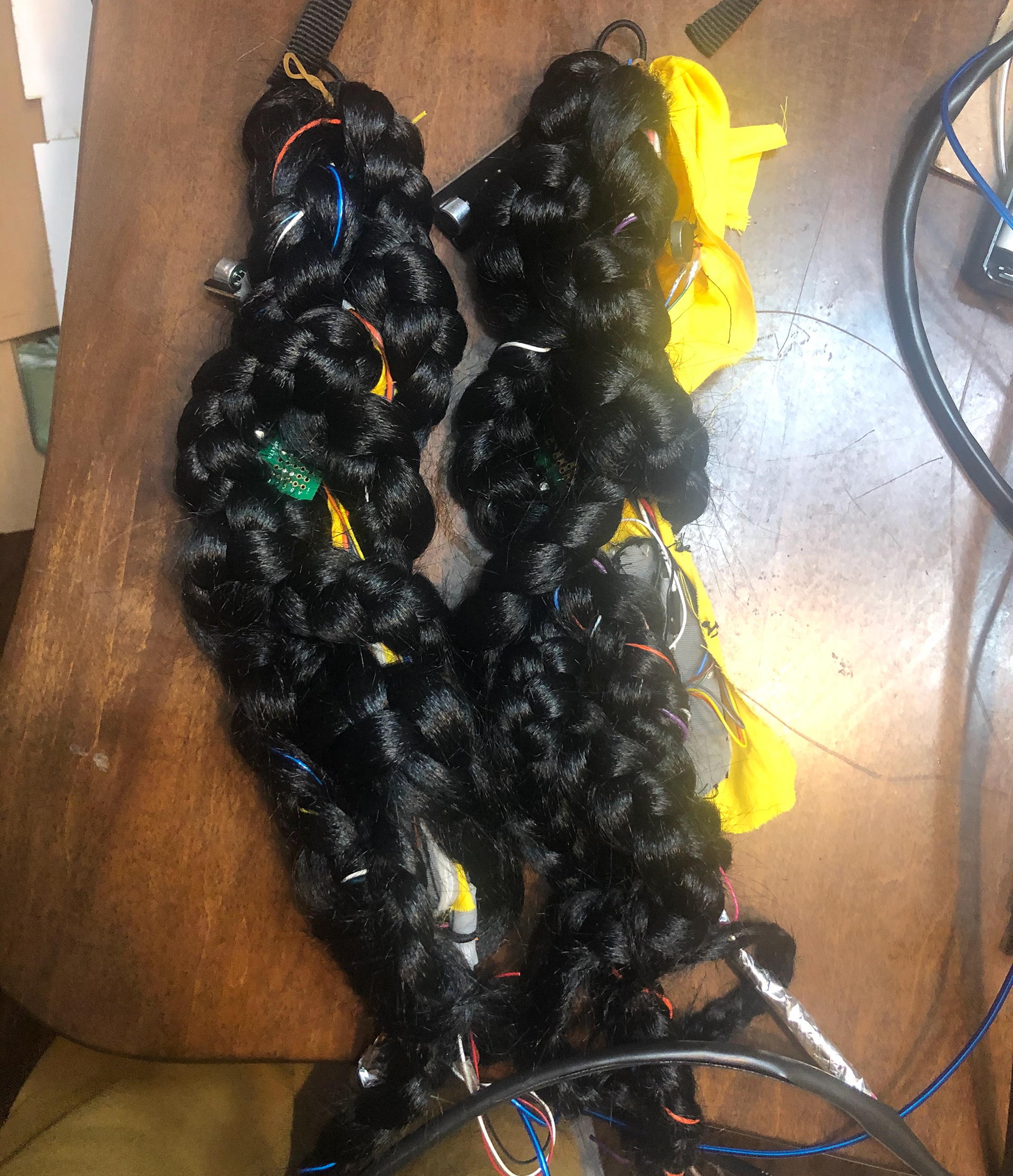
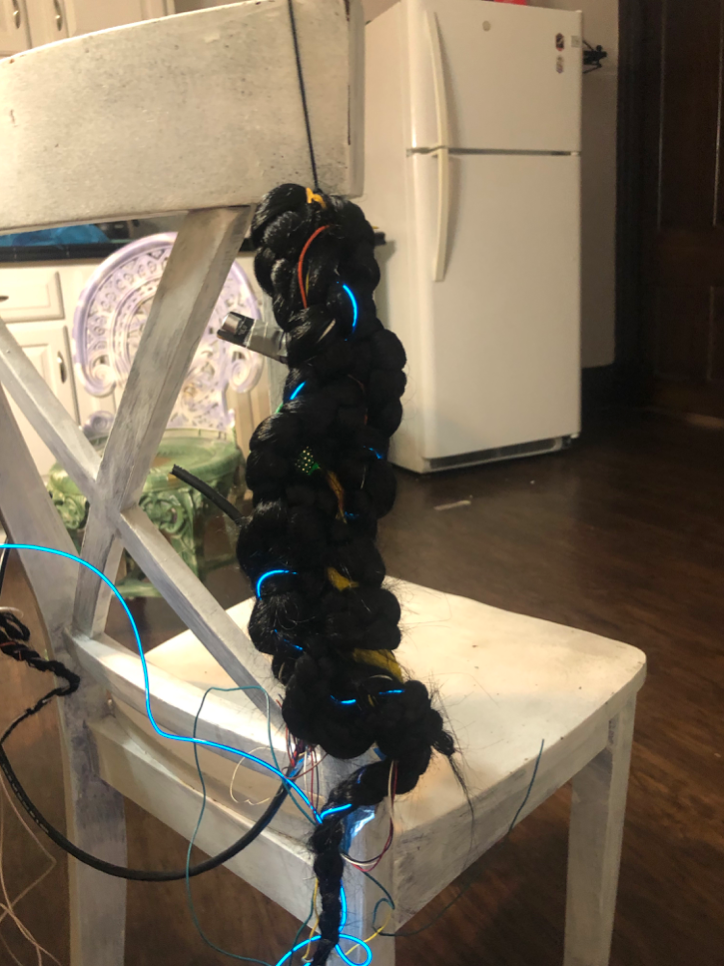
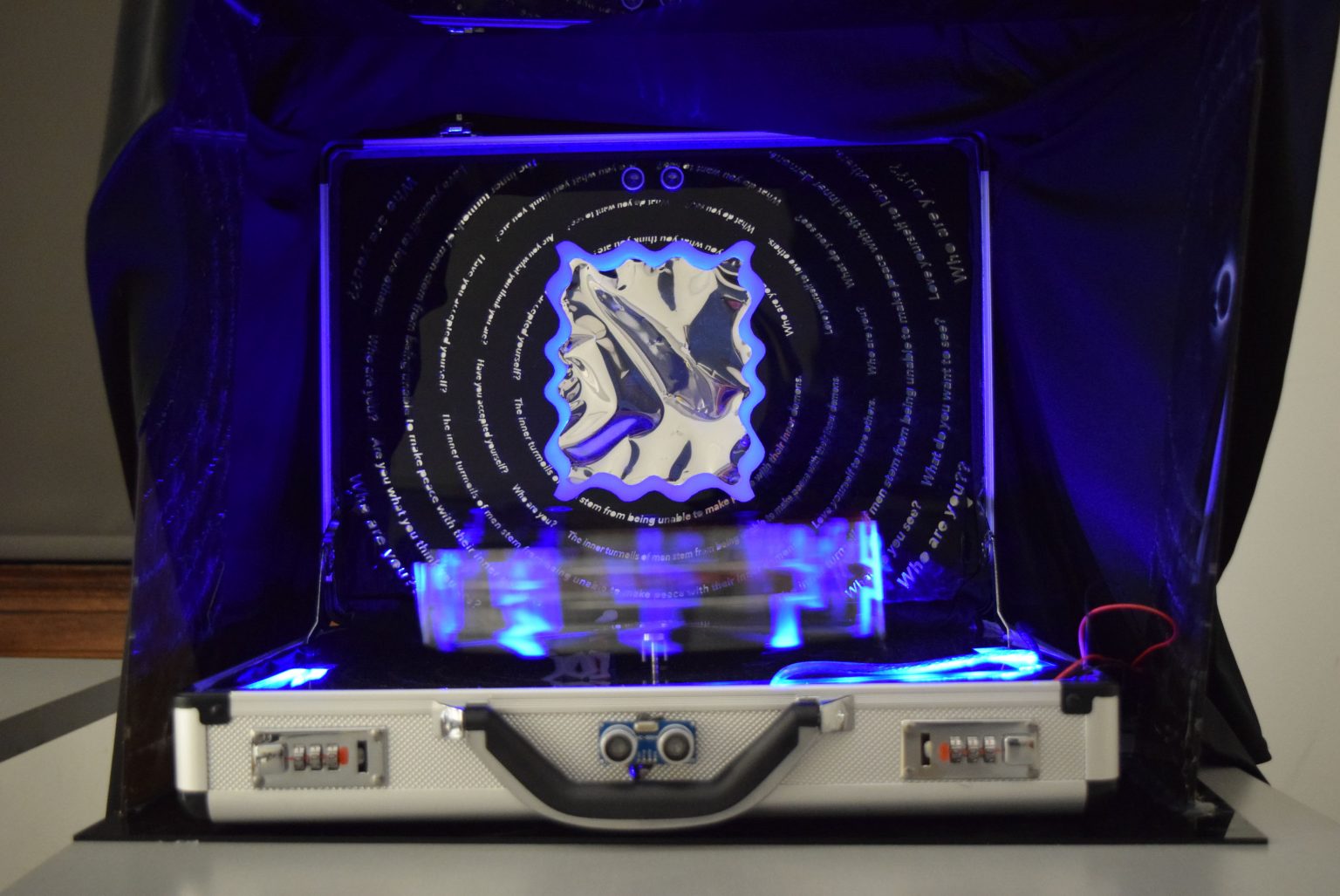
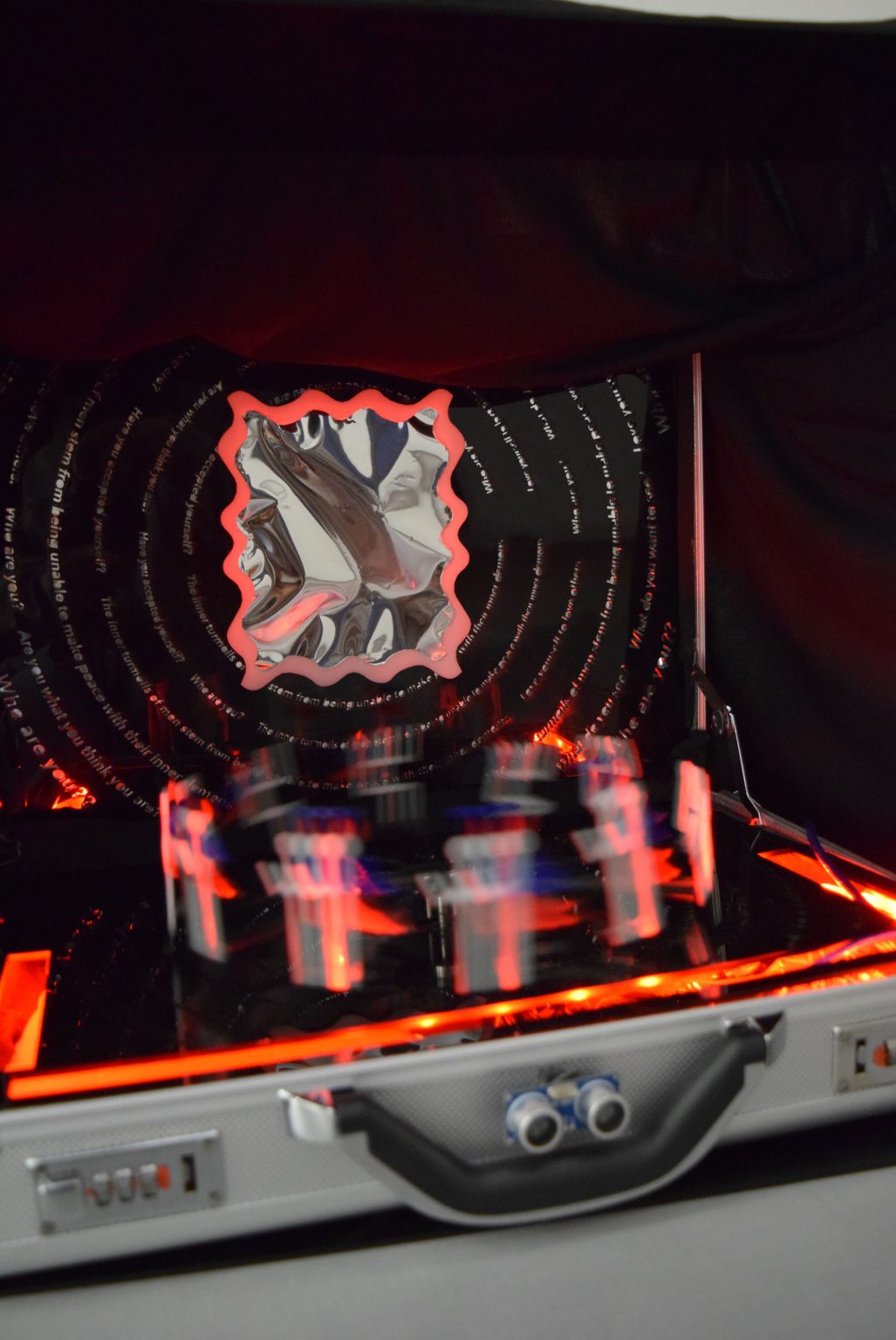
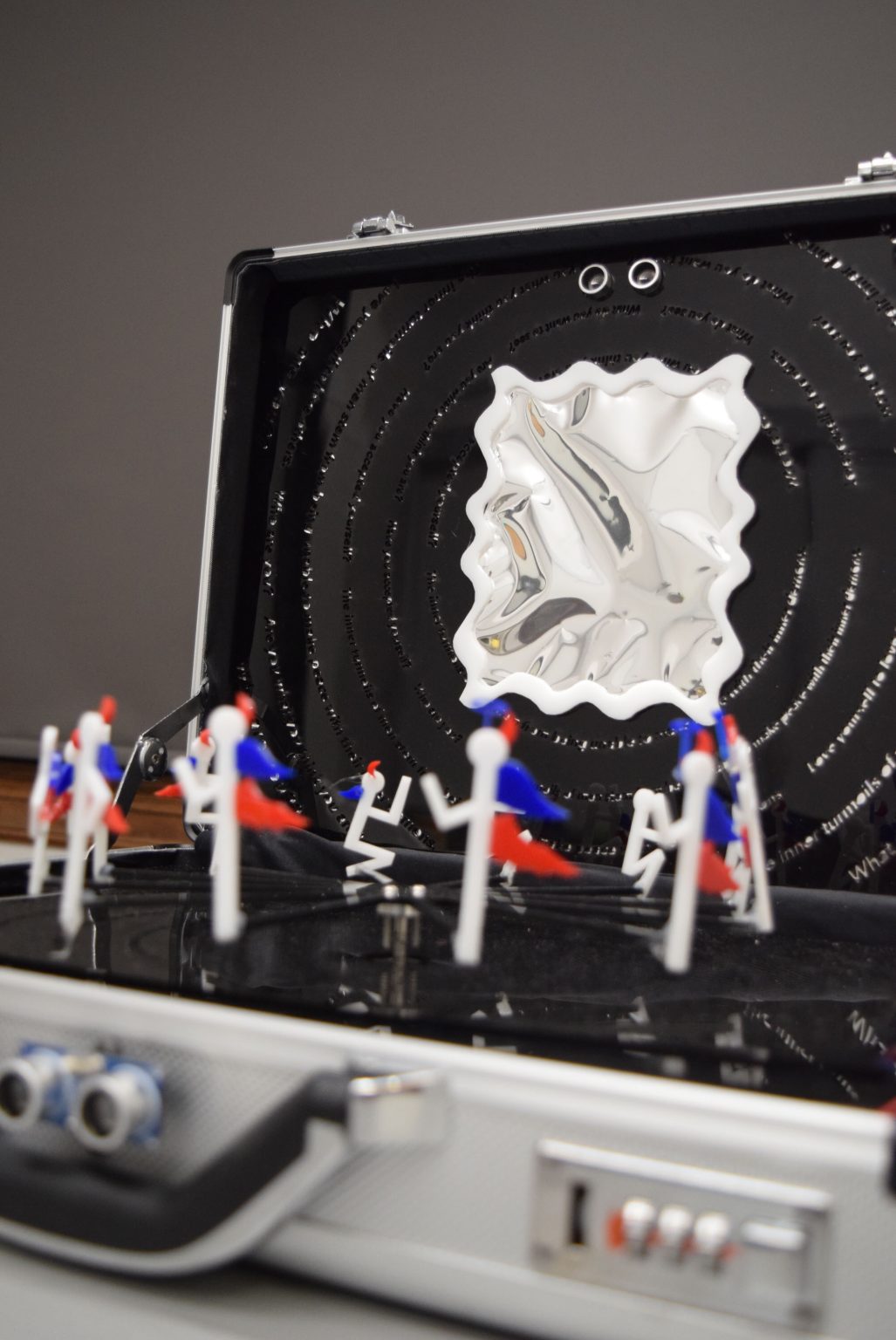
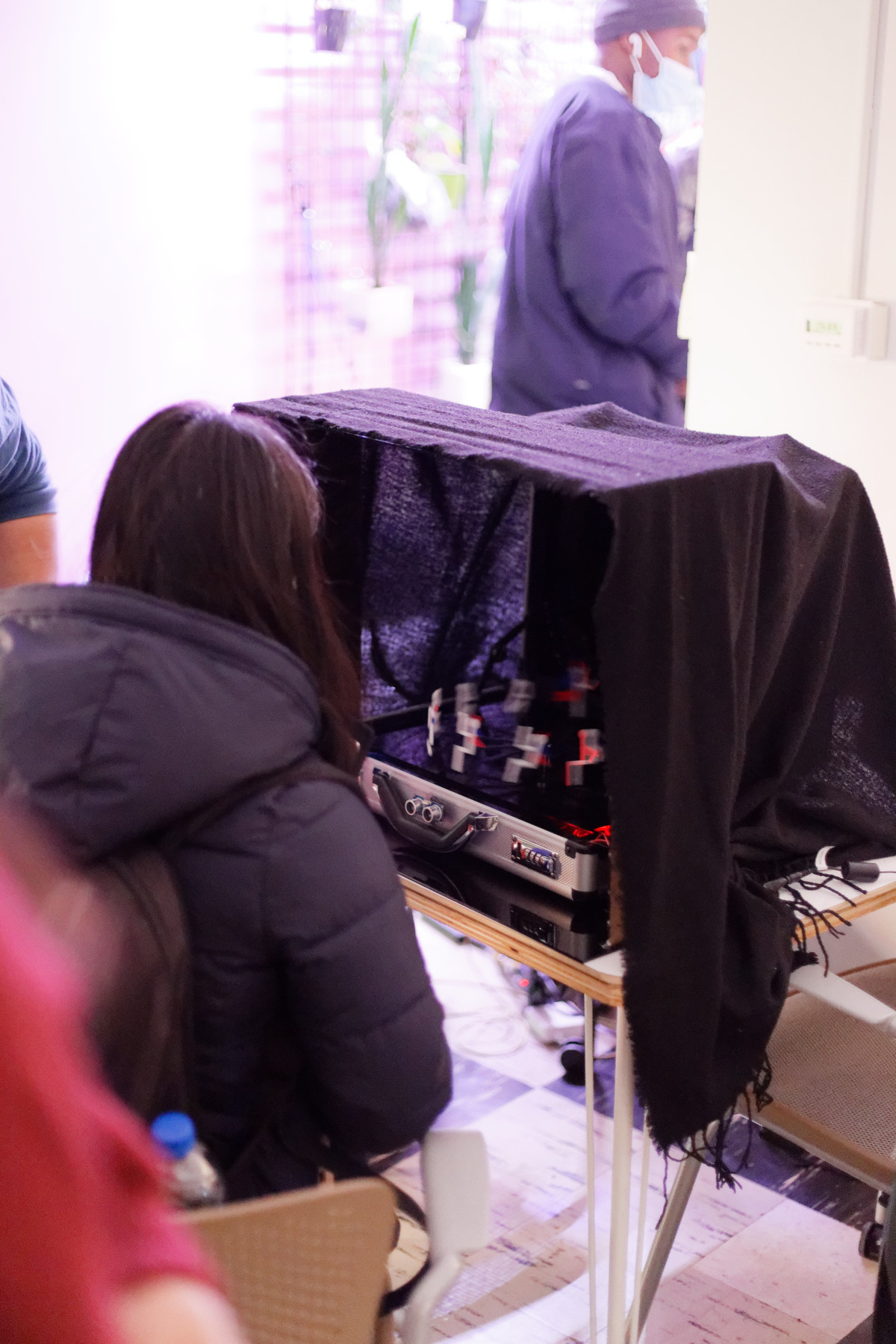
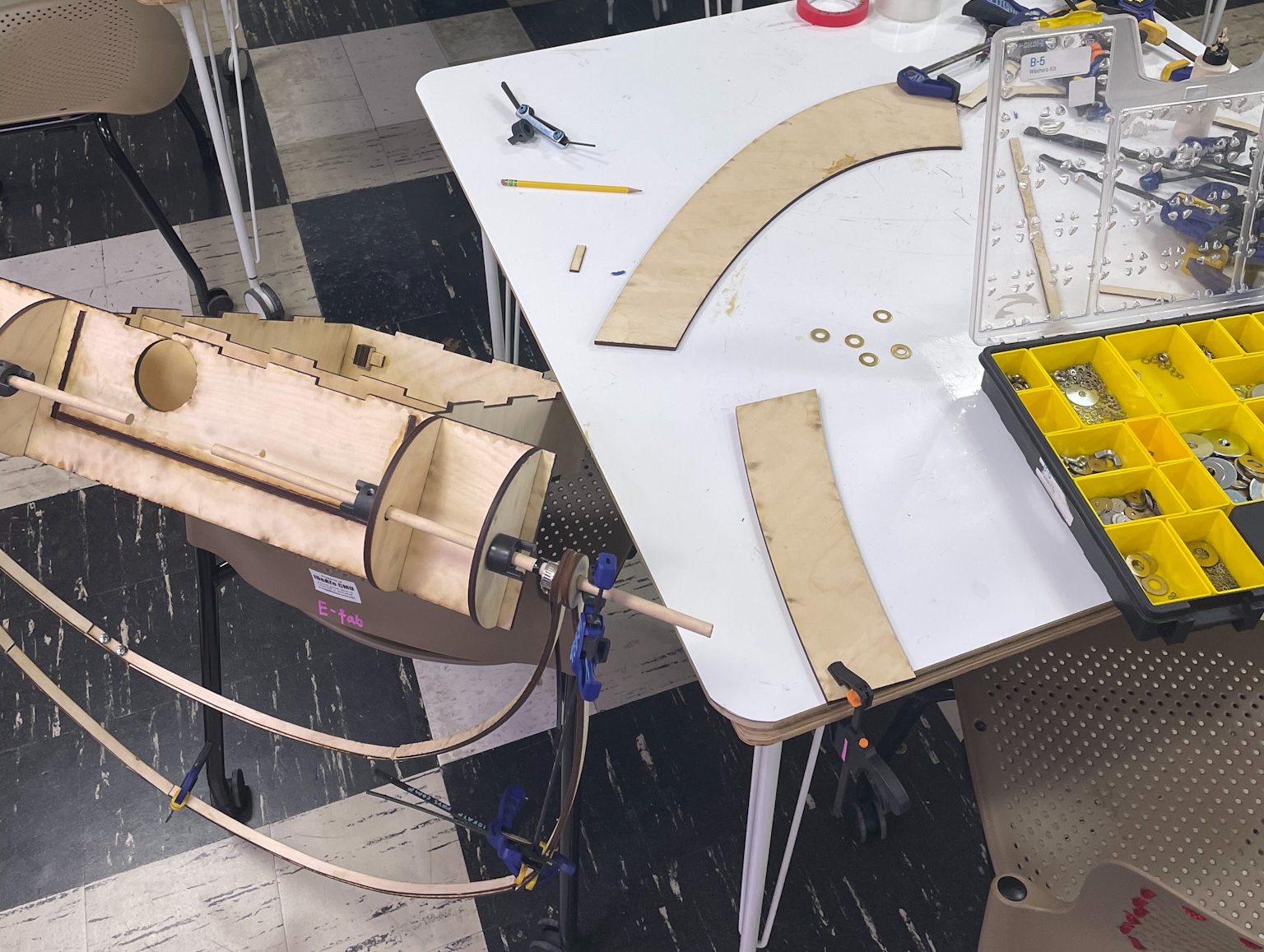
An interactive zoetrope installation designed to prompt introspection. The piece changes in response to the viewer's presence — their proximity alters what they see.
The title "Who Are You?" was designed to force introspection for guests who encounter the piece — meant for people to ponder how they see themselves, not to answer the question, but to sit with it.
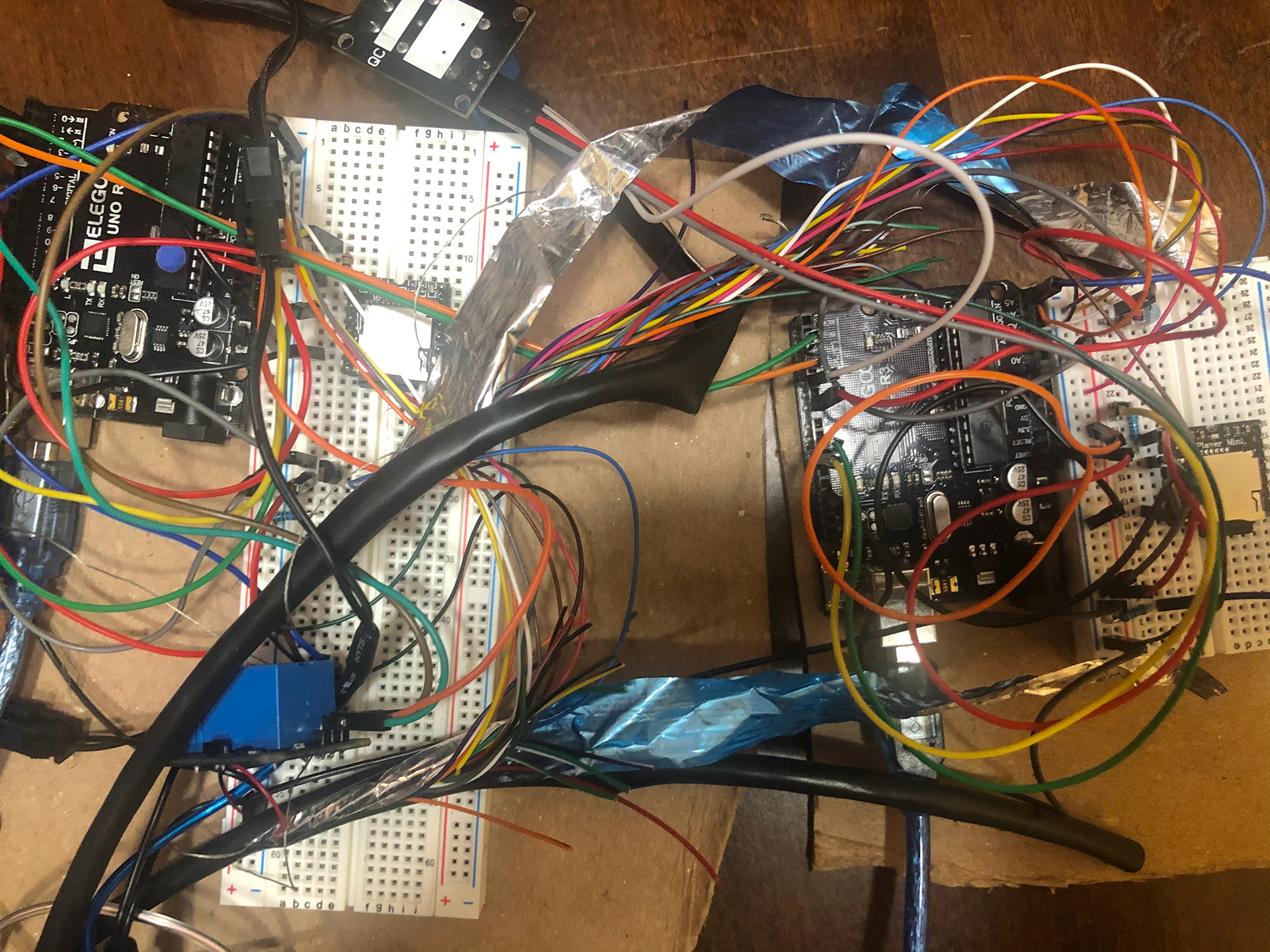
The device is built from three main active components working together to create its effect:
This simple mechanism carries a surprisingly layered narrative. The viewer is drawn in by the mesmerizing effect but quickly realizes their presence is shaping what they see. A mirror at the back of the installation extends this — placing the visitor inside the piece itself, not just in front of it.
Project 03
Retractable Rain Hood
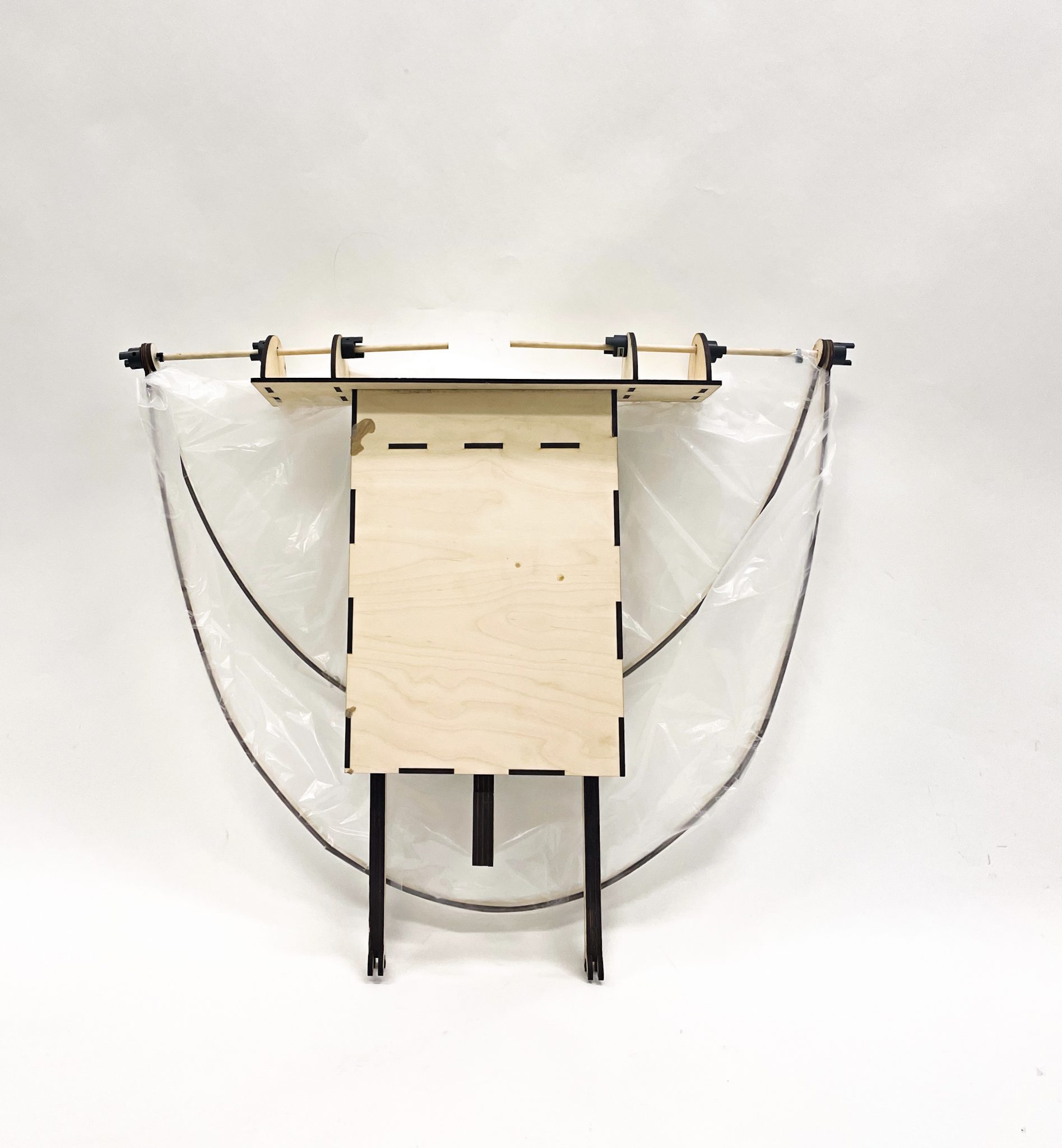
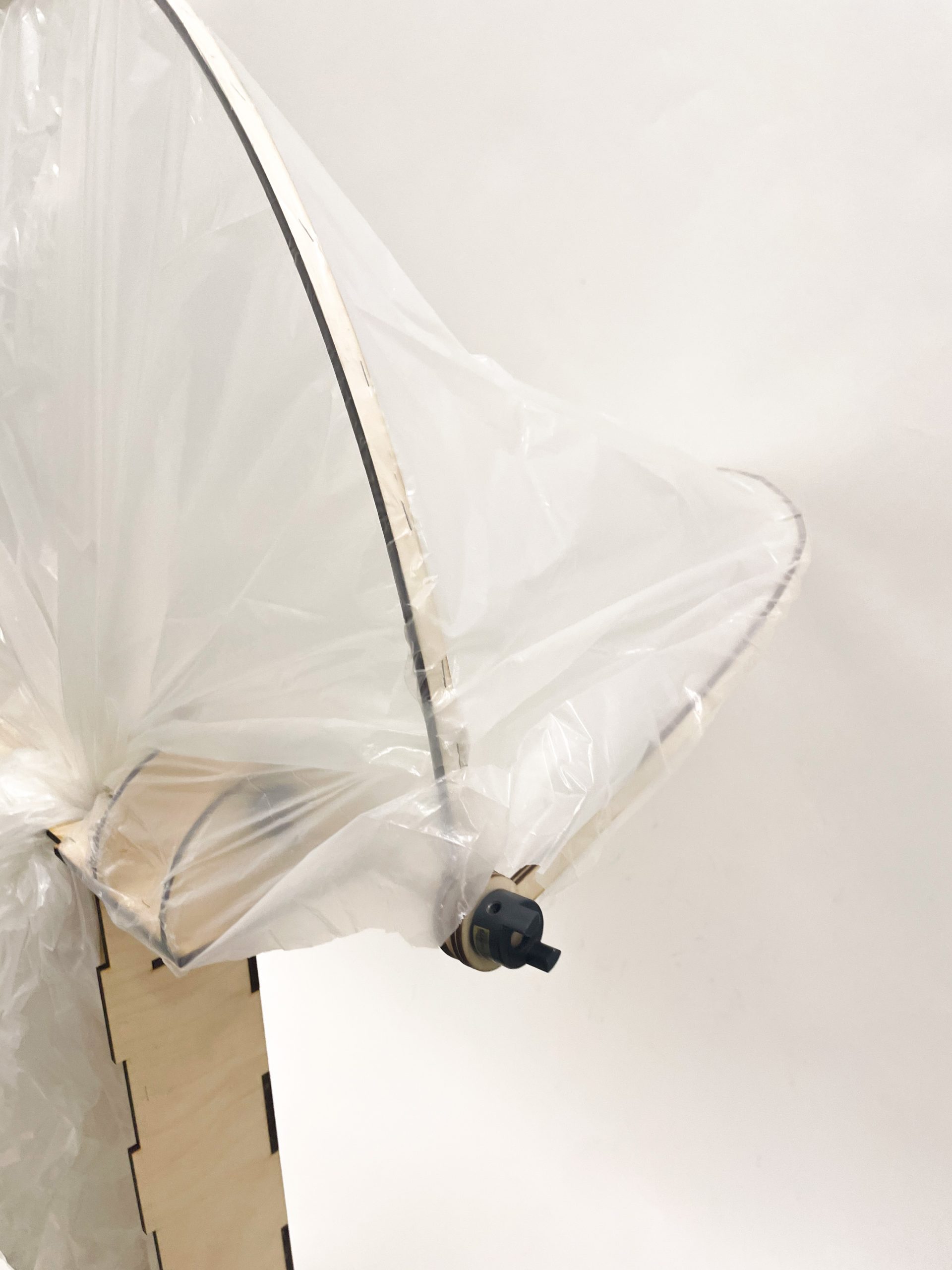
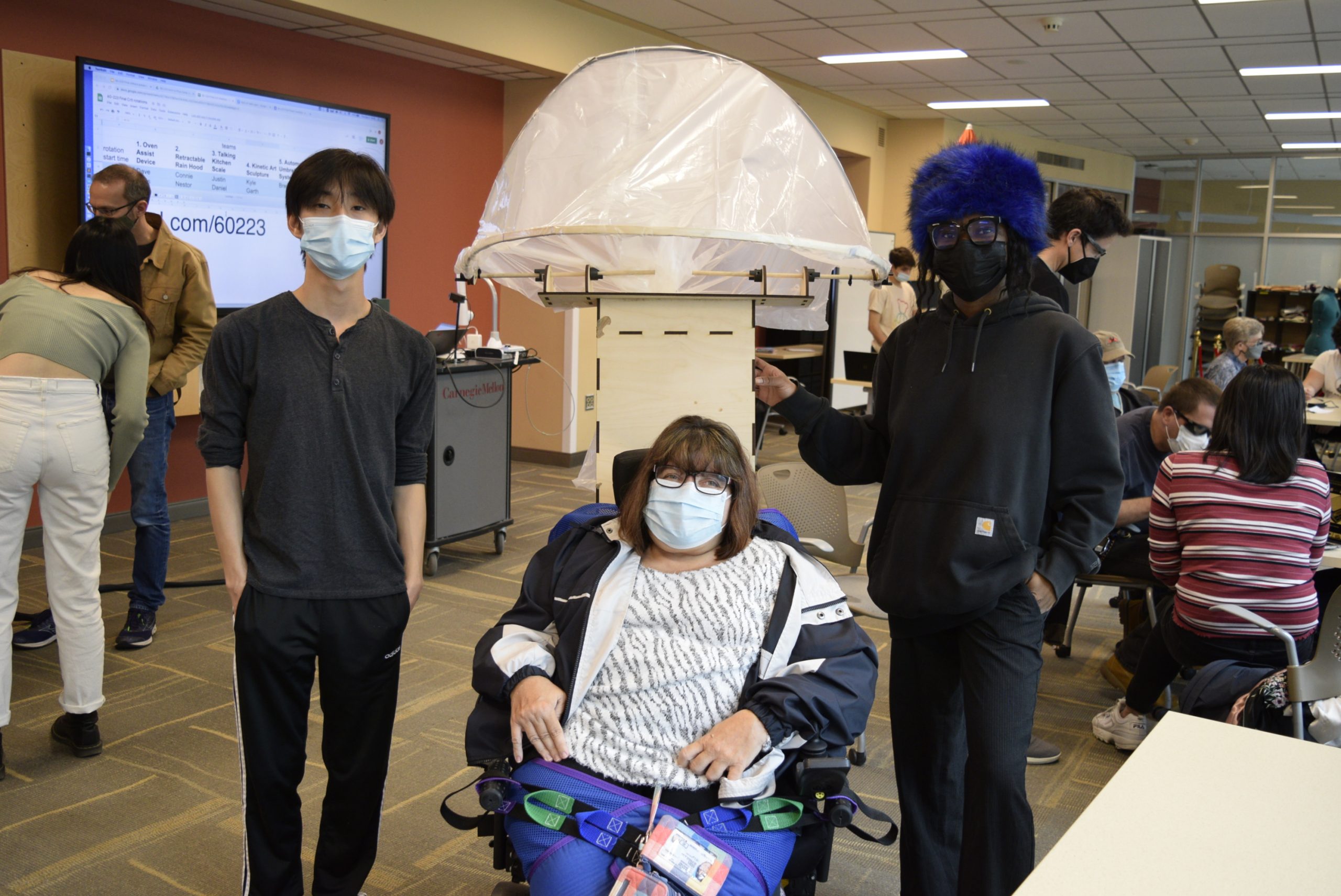
A human-centered design project developed in collaboration with a wheelchair user, addressing rain protection without compromising hand strength or mobility.
Our client uses a wheelchair and has limited hand strength — making standard umbrellas effectively inaccessible. The brief was to design a solution that protected her from rain while keeping her hands free and in control of her chair.
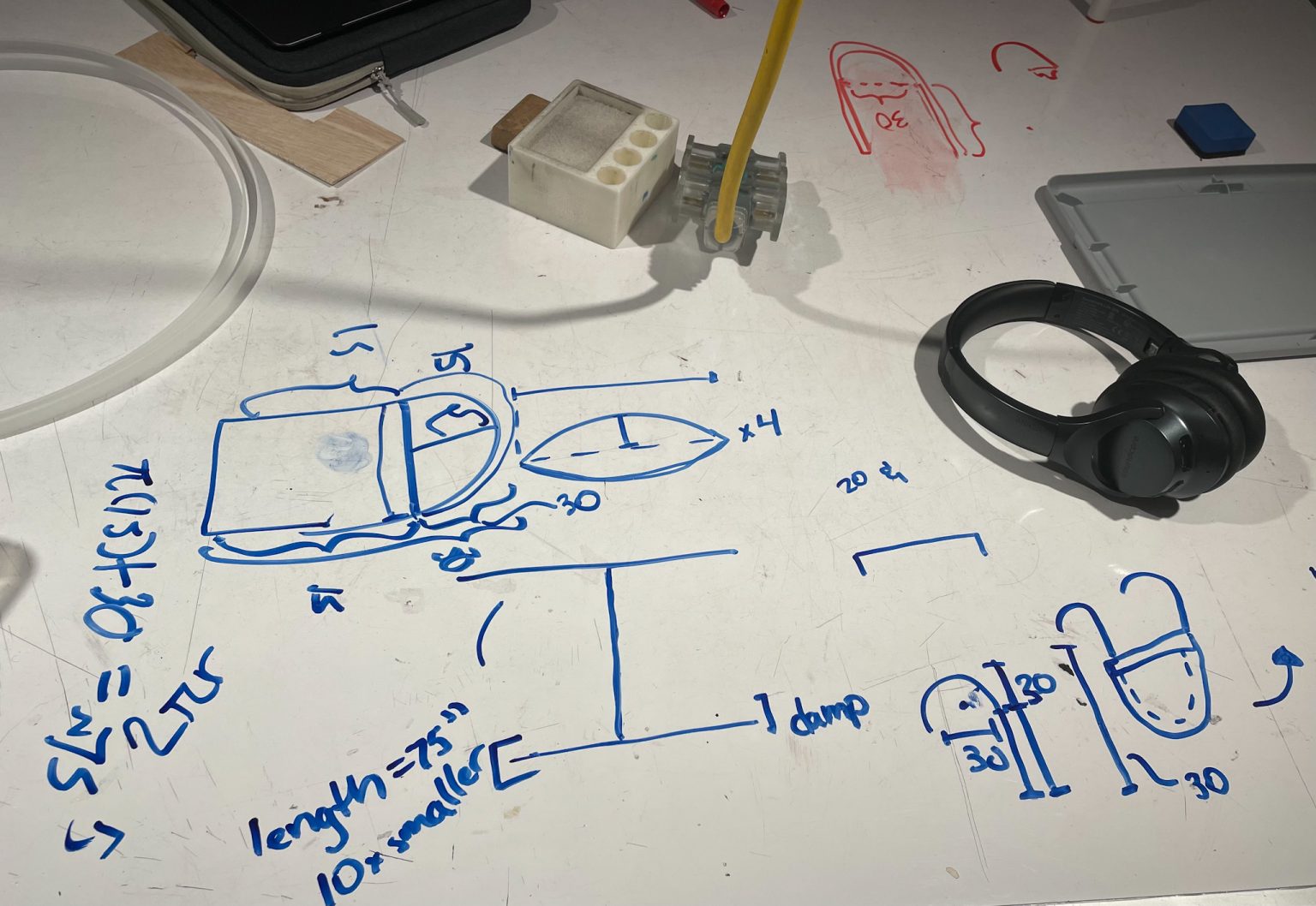
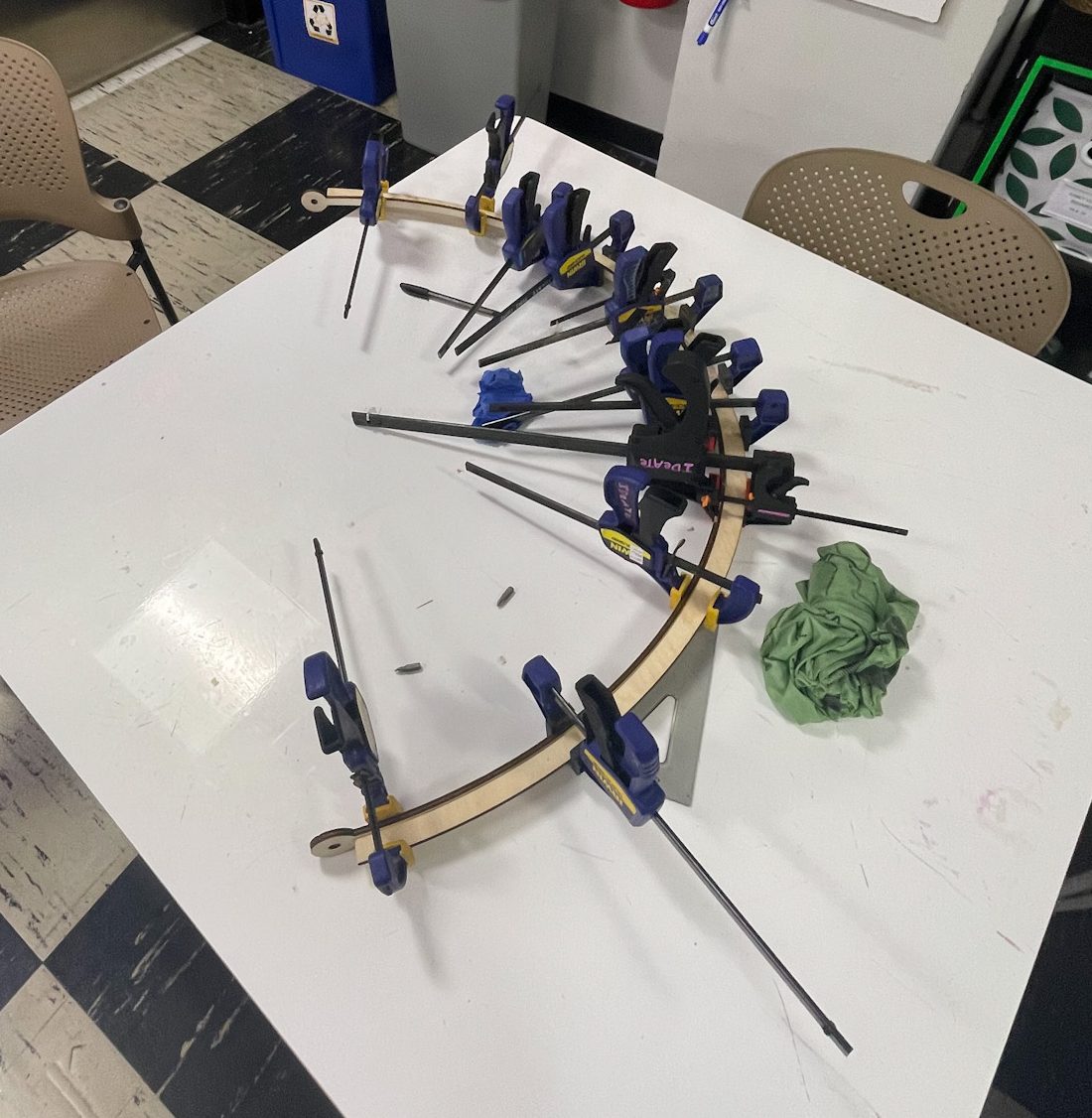
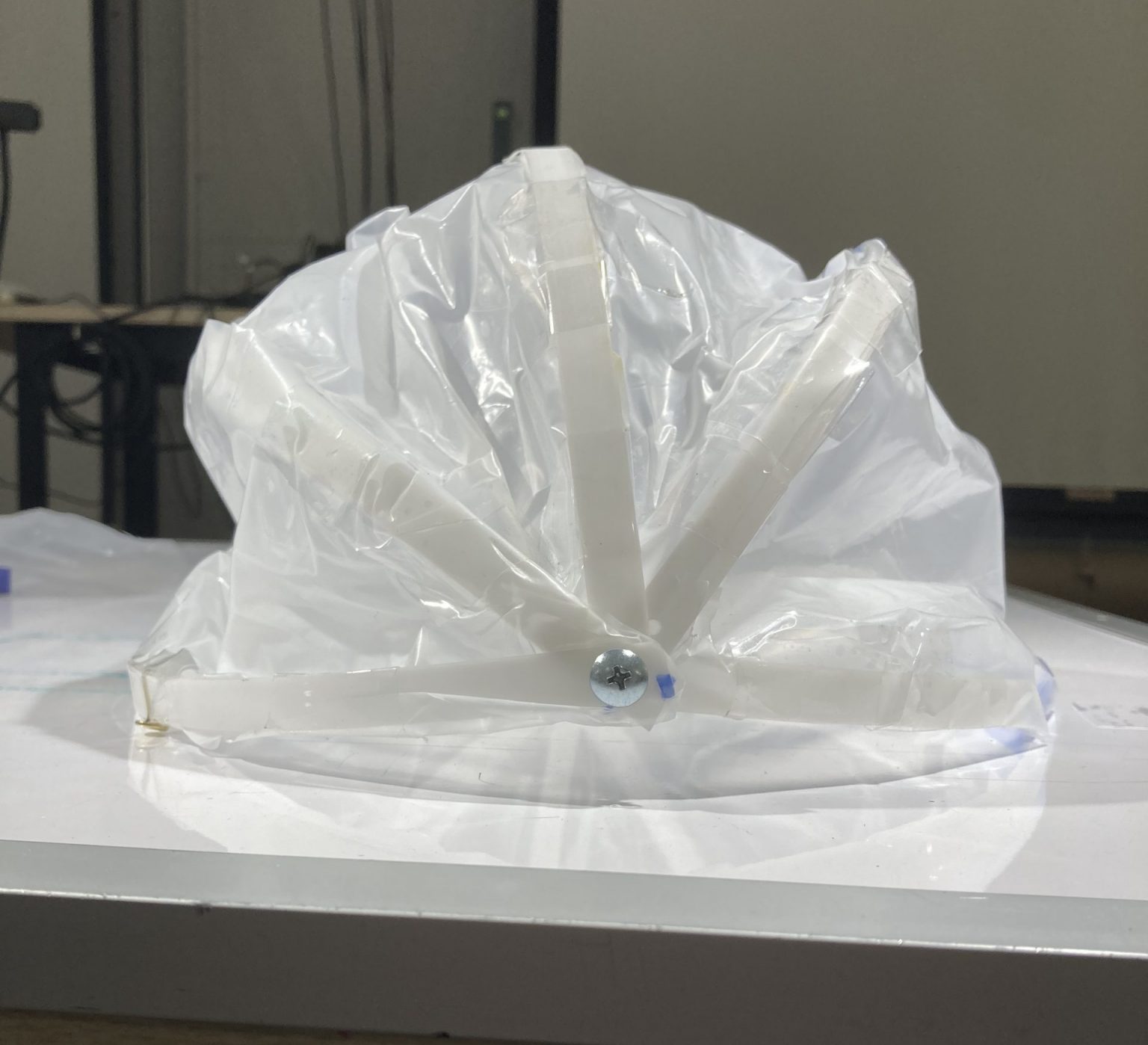
After working directly with the client through a series of meetings, we developed a retractable hood system that could be operated with minimal grip strength and without interrupting her ability to maneuver. The design was shaped entirely around her specific physical constraints and daily routines — not a general-purpose product, but something made for one person's real life.
[ Add materials, fabrication process, testing notes, or final outcome here. ]
Selected co-authored publications from work on wearable EEG systems at the intersection of neurotechnology, clinical usability, and human-centered design.
[ Pilot Evaluation of Sevo Systems for Epilepsy: Equitable EEG for Coarse, Dense, and Curly Hair. National Institutes of Health ]
[ National Institutes of Health ]
[ Sevo Electrodes Outperform Traditional Electrodes in EEG Quality for Coarse, Curly Hair. American Epilepsy Society ]
[ American Epilepsy Society ]
[ Clinical Evaluation of Sevo Systems: Equitable EEG for Coarse, Curly Hair ]
[ American Epilepsy Society ]
I'm a product design engineer with a background spanning hardware development, clinical research, UX, and the visual arts. I studied product innovation and applied entrepreneurial studies in the school of engineering at one of the top five universities in the US — a self-defined major that set the tone for everything since. I don't fit neatly into one box, and I've learned to make that the point.
For six years I held two concurrent roles on the same project — product design engineer and ECE researcher. I was at the fabrication bench and the coordination table simultaneously: prototyping devices, advising clinicians, managing four international sites, and co-authoring peer-reviewed publications.
My arts practice runs alongside all of this, not separate from it. I bring an engineer's rigor, a researcher's patience, and an artist's eye — and I'm most useful when those things are needed in the same room.
Research & Design
Human-Centered Design UX Research UI DesignCreative
Creative Direction Photography Visual StorytellingMaking
Physical Prototyping 3D Printing + Laser Cutting ArduinoTools
Figma SolidWorks Adobe Creative SuiteOpen to freelance, contract, and part-time work in product design, research, UX, and visual communication.
Location
[ WHEREVER THE SUN IS SHINING ] Open to remoteResume
View full resume →